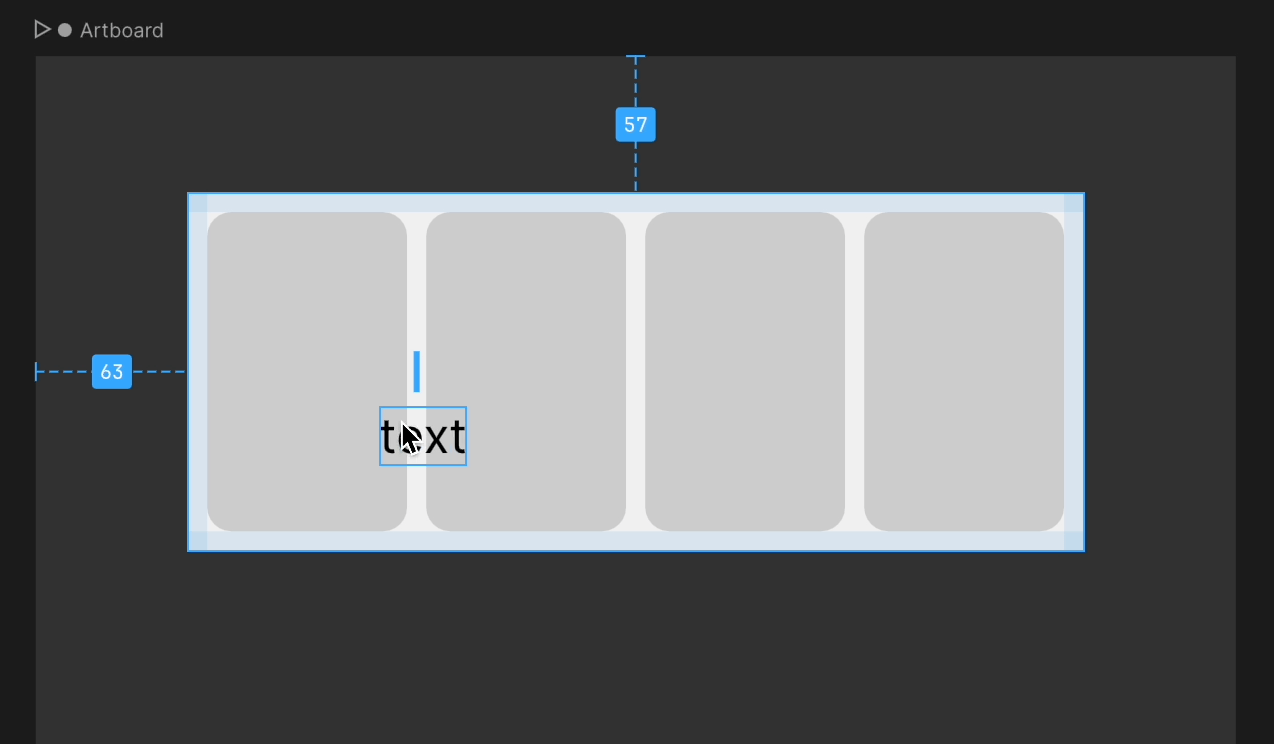
Drawing a Layout
The Layout tools are in the Arrangement Tools menu in the toolbar.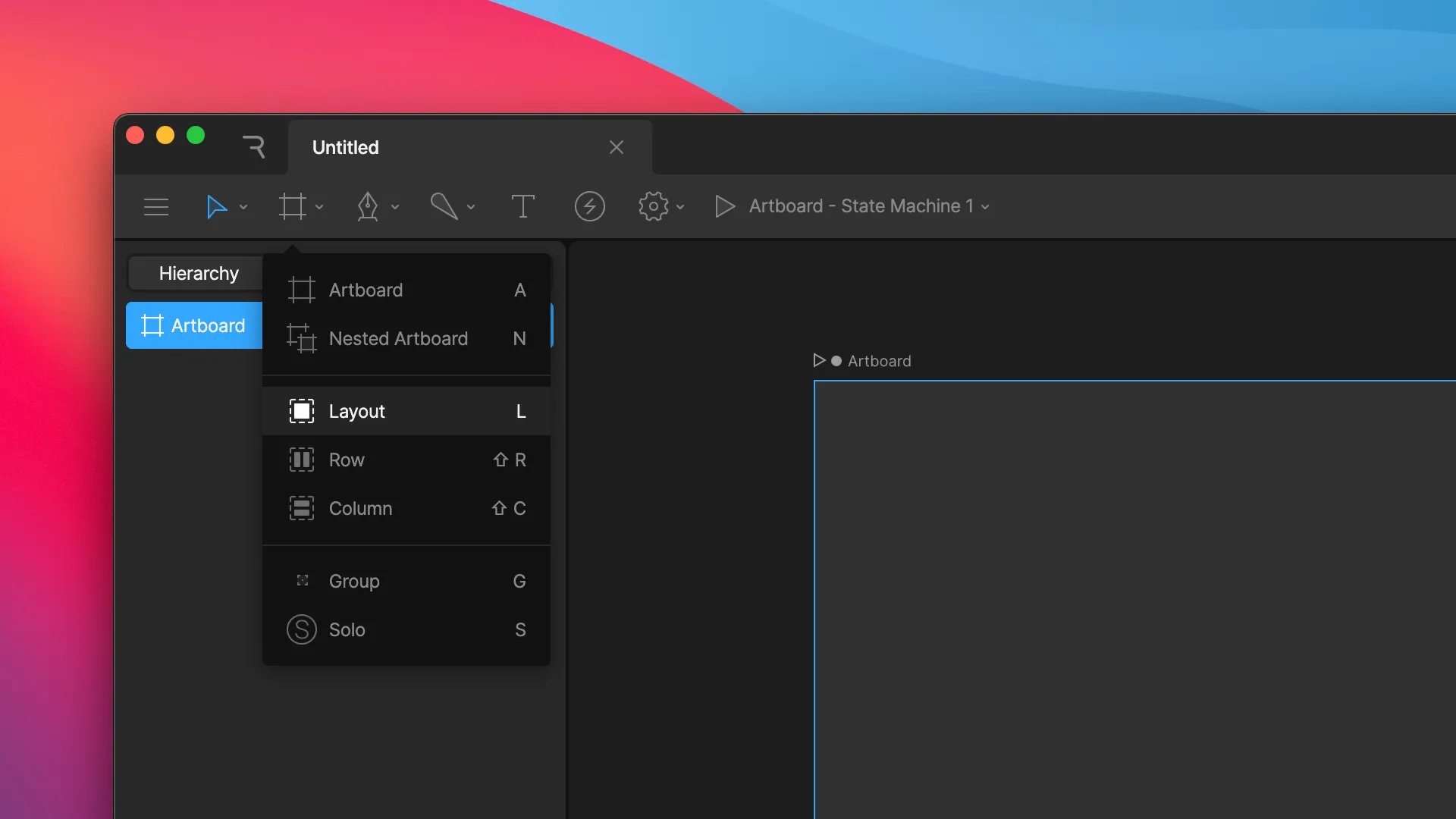
- Drag on the artboard to create an absolute Layout that’s positioned freely.
- Drag on top of an existing Layout to create a relative child of that Layout.
Drawing a Row, Column, Grid, or Stack
The Row, Column, Grid, and Stack tools draw a Layout of that type that already contains children, so you can start arranging content right away.- Row (Shift+R) and Column (Shift+C): While dragging, press ↑ or ↓, or a number key, to set the number of children. The children’s widths and heights are set to Fill.
- Grid: Draws a Grid with two
1frcolumns and two1frrows. While dragging, press ↑ or ↓ to add or remove a column and row together, or a number key to set the number of each. - Stack: Draws a Stack containing layered children of decreasing size.
Wrapping content in a Layout
To add a Layout around content you’ve already made, select one or more objects and do one of the following:- Right-click the selection on the stage or in the Hierarchy, then select Wrap in > Layout.
- Press Shift+L.
- Click Layout Selection in the Inspector. This button appears when the selection doesn’t include any Layouts.
Adding a child Layout
To add an empty Layout inside the selected Layout, click Add Child Layout in the Inspector. The new child’s width and height are set to Fill.
Moving Layouts into other Layouts
You can move any Layout into another Layout at any time:- In the Hierarchy: Drag the Layout onto its new parent.
- On the stage: Drag the Layout over its new parent. An indicator shows where among the parent’s children it will be inserted.