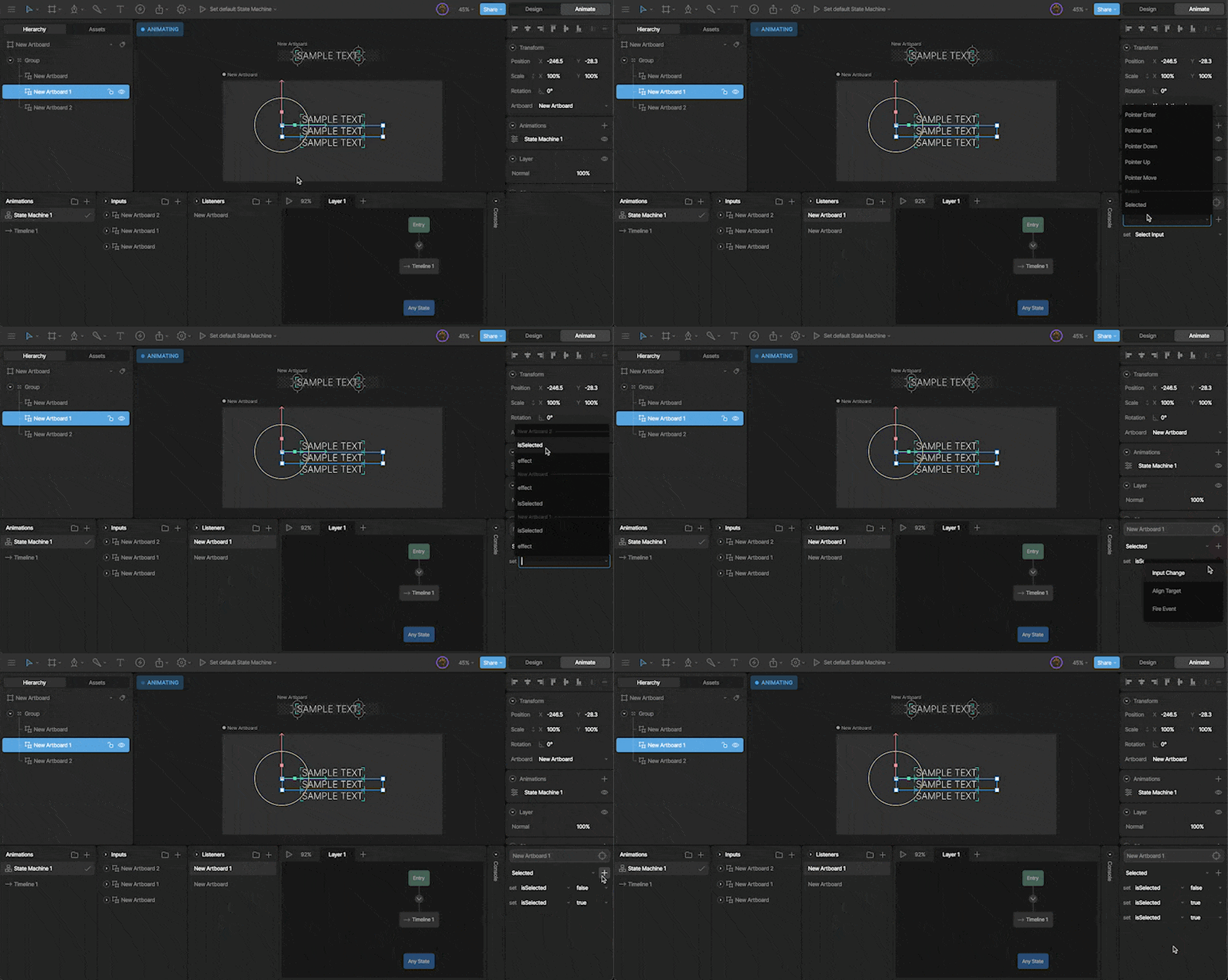
Inputs have movedInputs now live in the Animations panel. Expand the relevant state machine to view its Listeners and Inputs sections.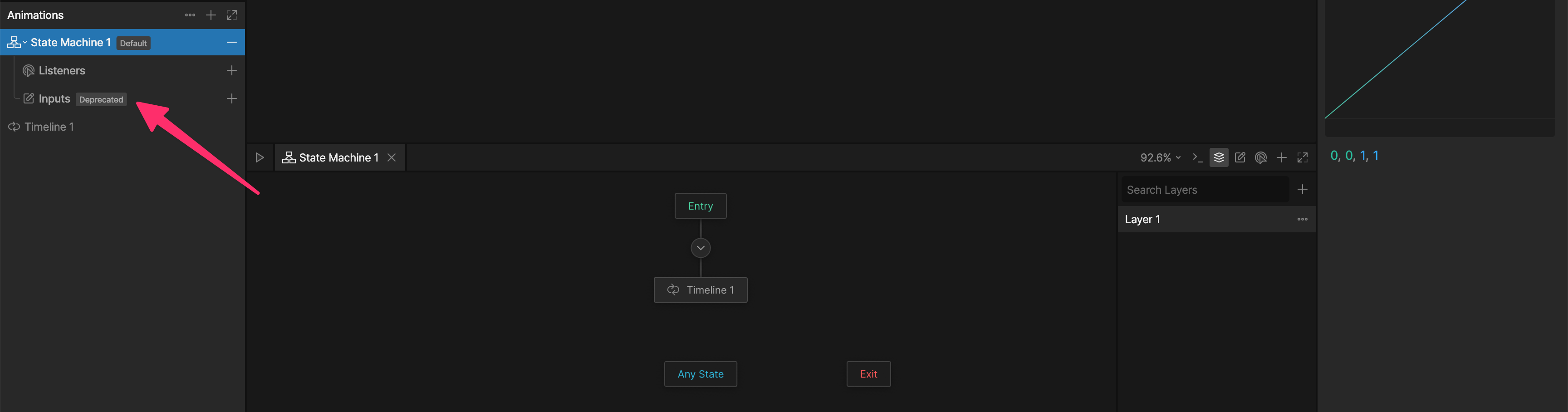
Creating a new input
To create a new Input, use the plus button in the input panel. After hitting the plus button, you’ll be prompted to select the type of input you want to create. There are three types of inputs; booleans, triggers, and numbers. The same menu has a Folder option, which adds a folder for organizing the state machine’s inputs.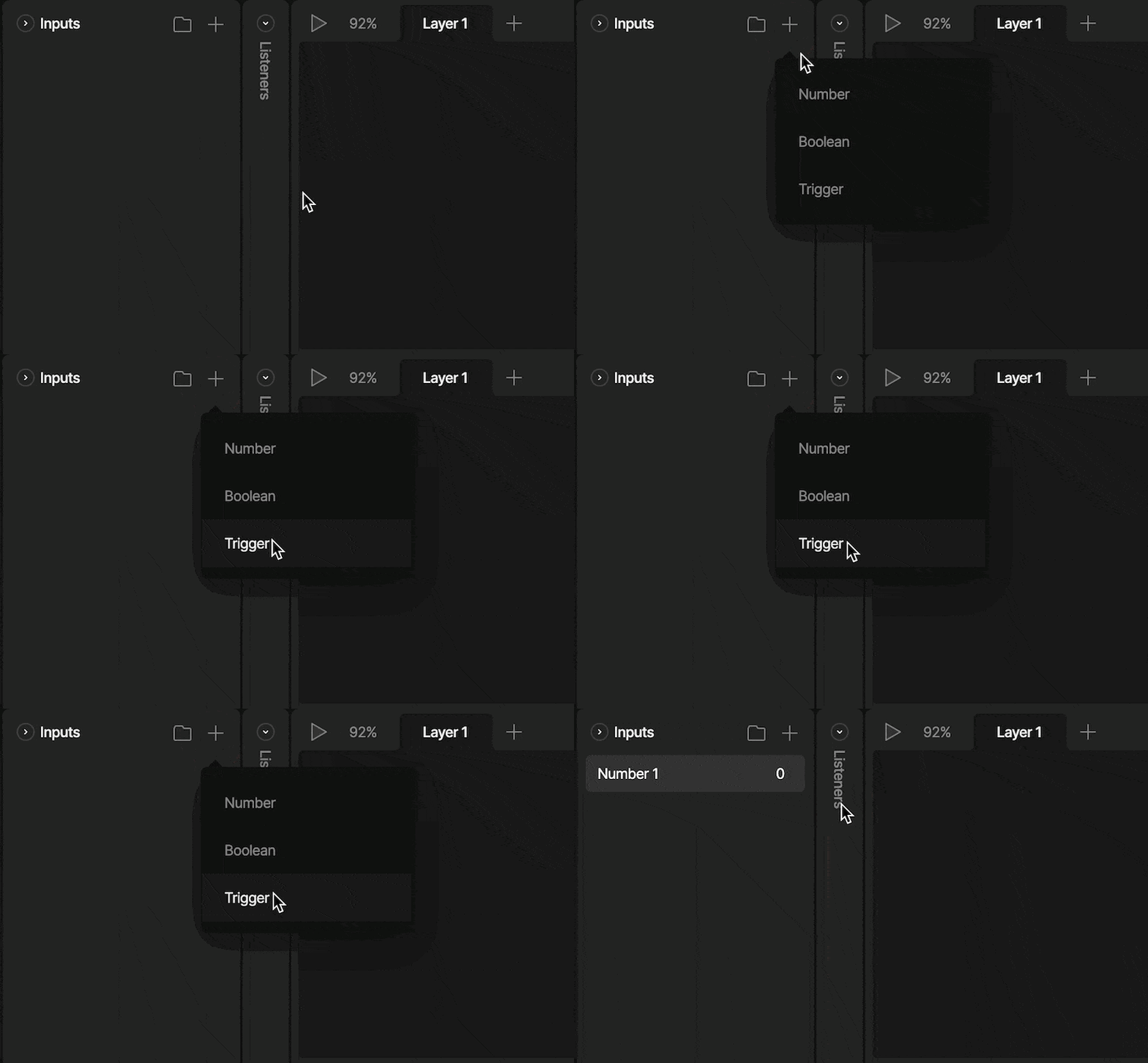
Input types
We can use three types of inputs depending on the situation and type of interactive content: booleans, triggers, and numbers. We’ll discuss each of these inputs below.Boolean
A boolean can hold either a true or false value.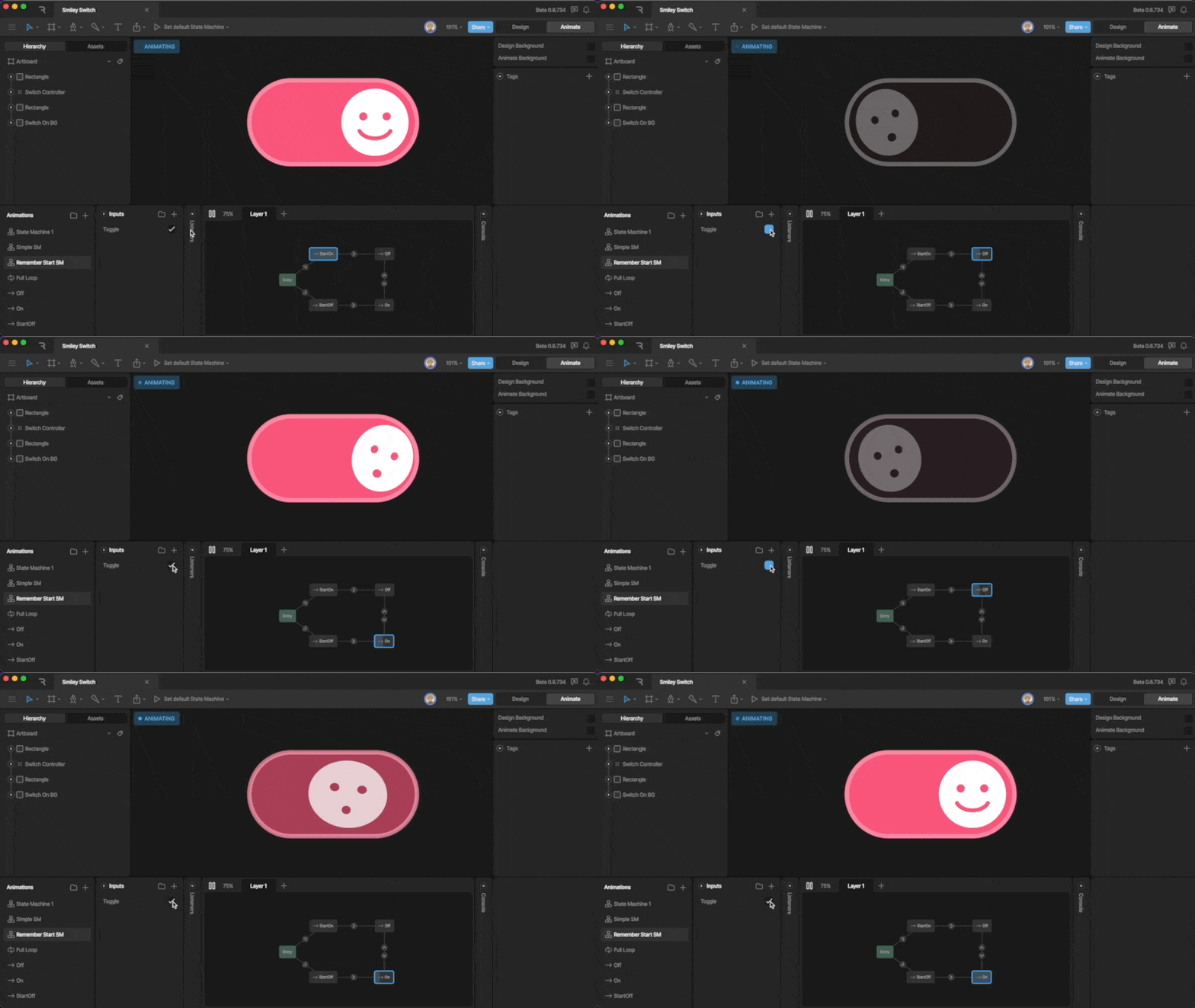
Trigger
Triggers are similar to booleans, but can only become true for a short time. To test a trigger, play the state machine, then click Fire next to the trigger. Transitions that use it react.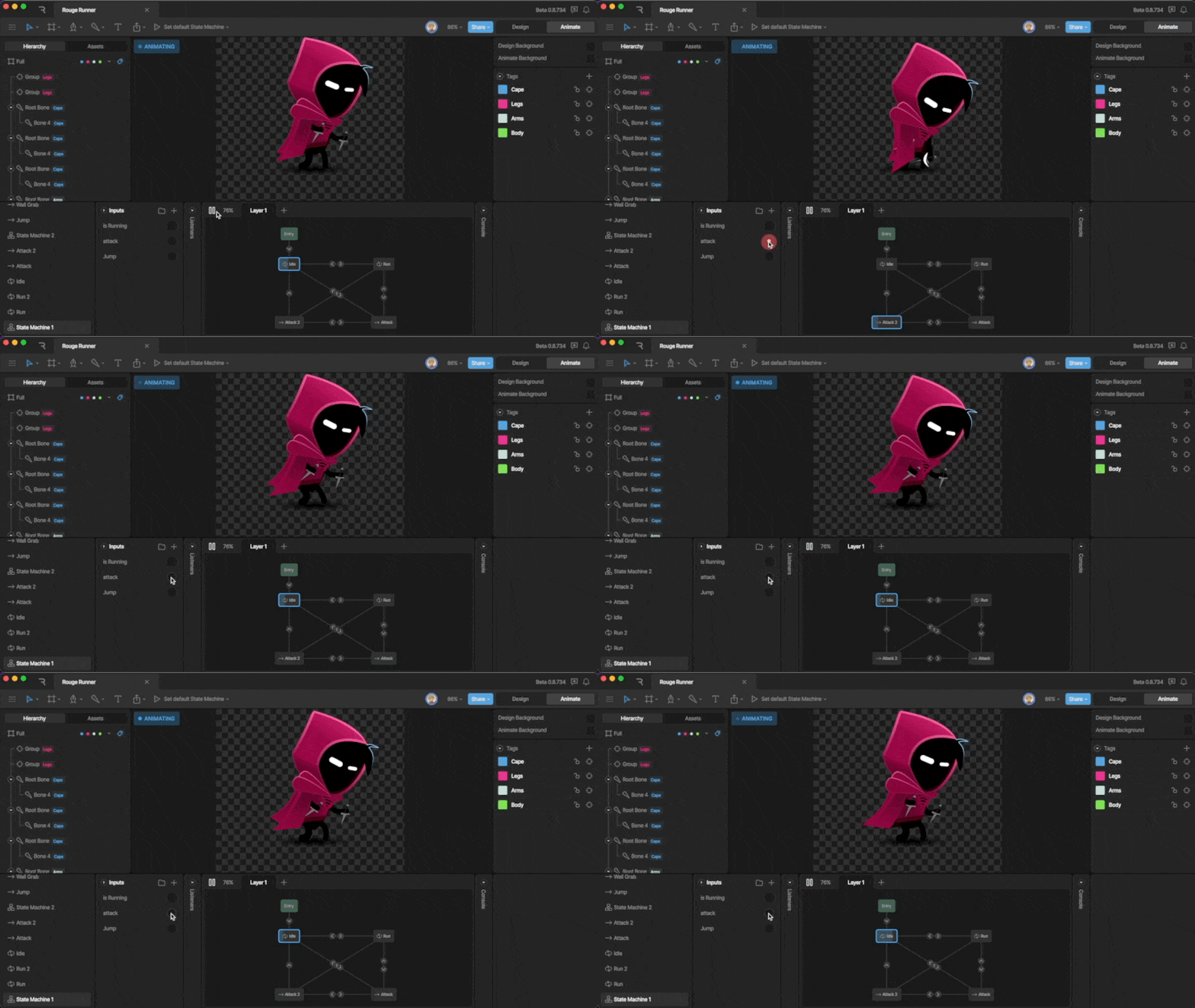
Number
A number input give you a number box that can be any integer.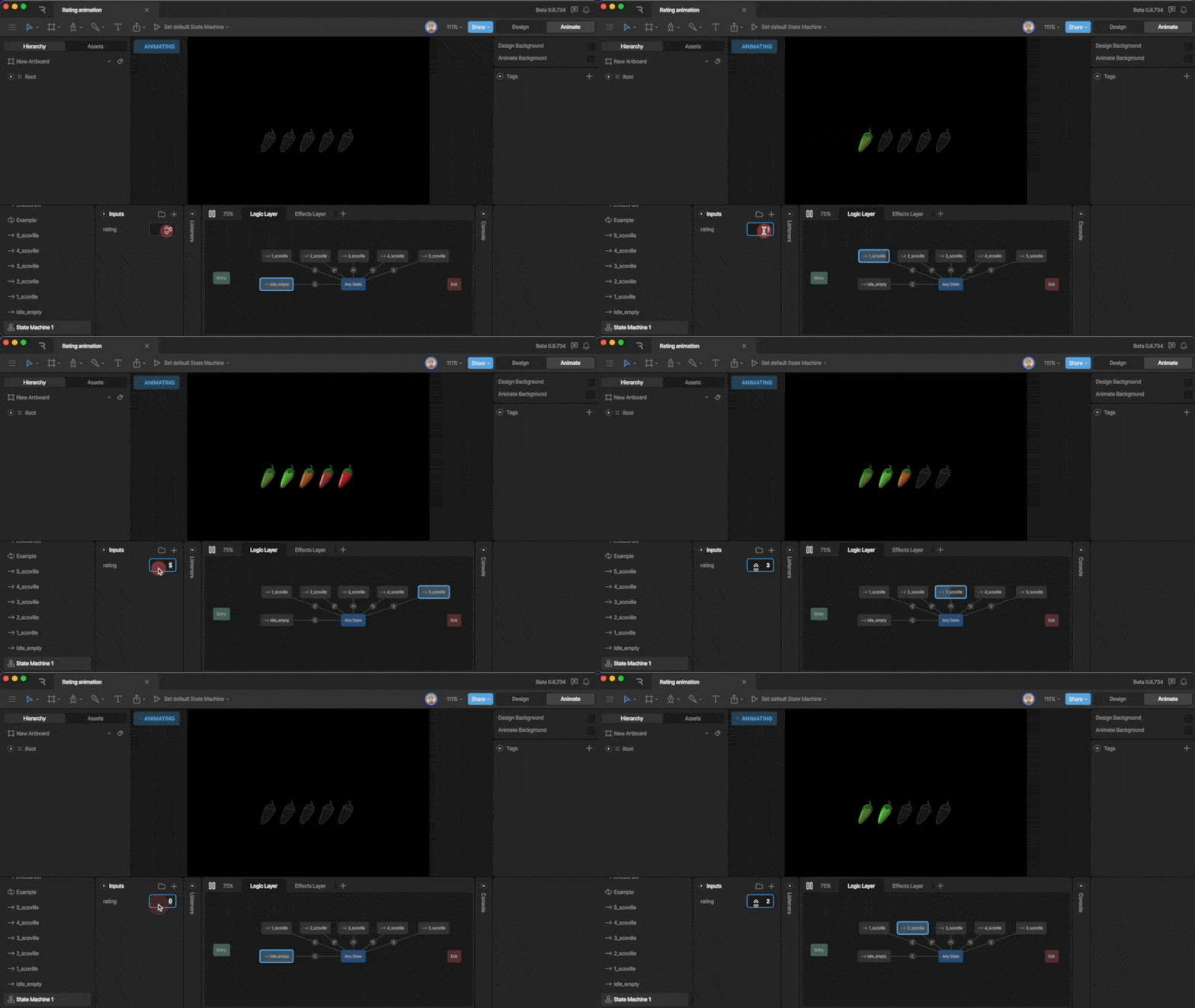
Exposing inputs and events
Expose the Inputs and/or Events of a Component to control them from a parent/host Artboard. This allows you to control one Component with another via a State Machine.How to expose an input
Exposing an Input allows the parent artboard to access and manipulate it. To do this, select the desired input, then check the expose to main artboard option in the inspector.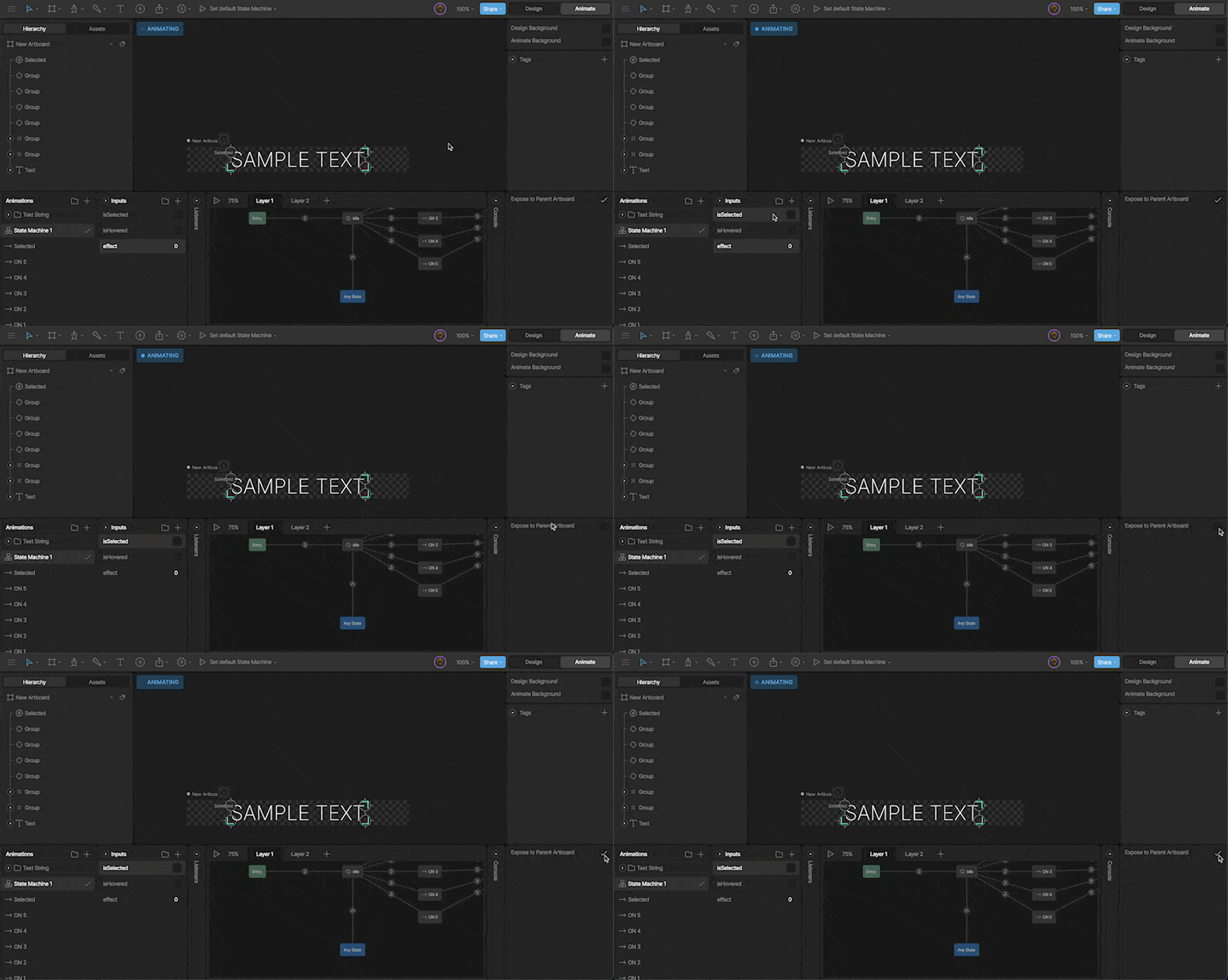
Using inputs on a parent Artboard
Exposed inputs can be found in the Inputs panel or in the inspector. You can use them through listeners, an event, or by keying them on a timeline.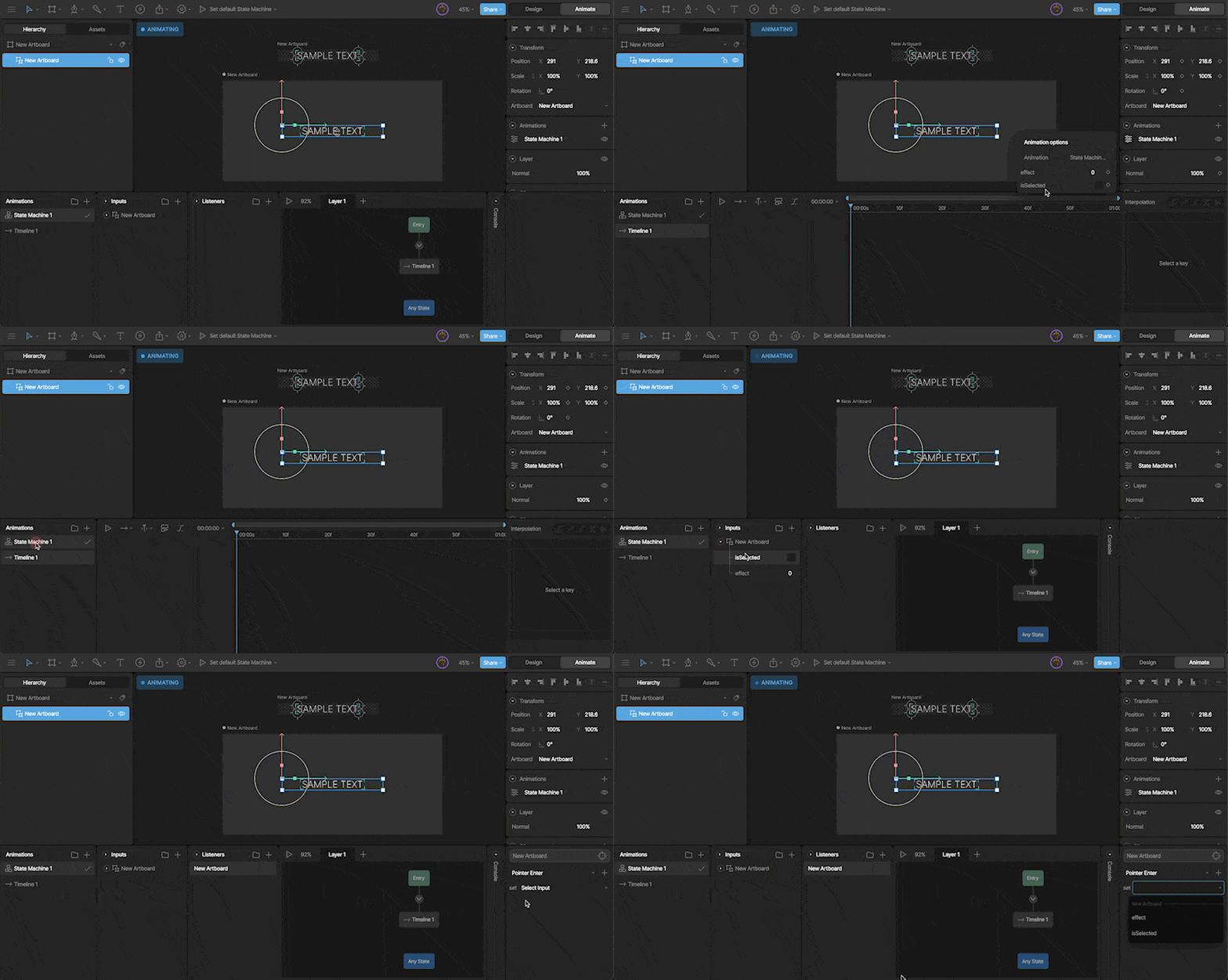
Via a listener
When you create a listener, you’ll find all exposed Inputs as a set input property of a Listener. This option lets you, for example, change the boolean input of multiple artboards simultaneously.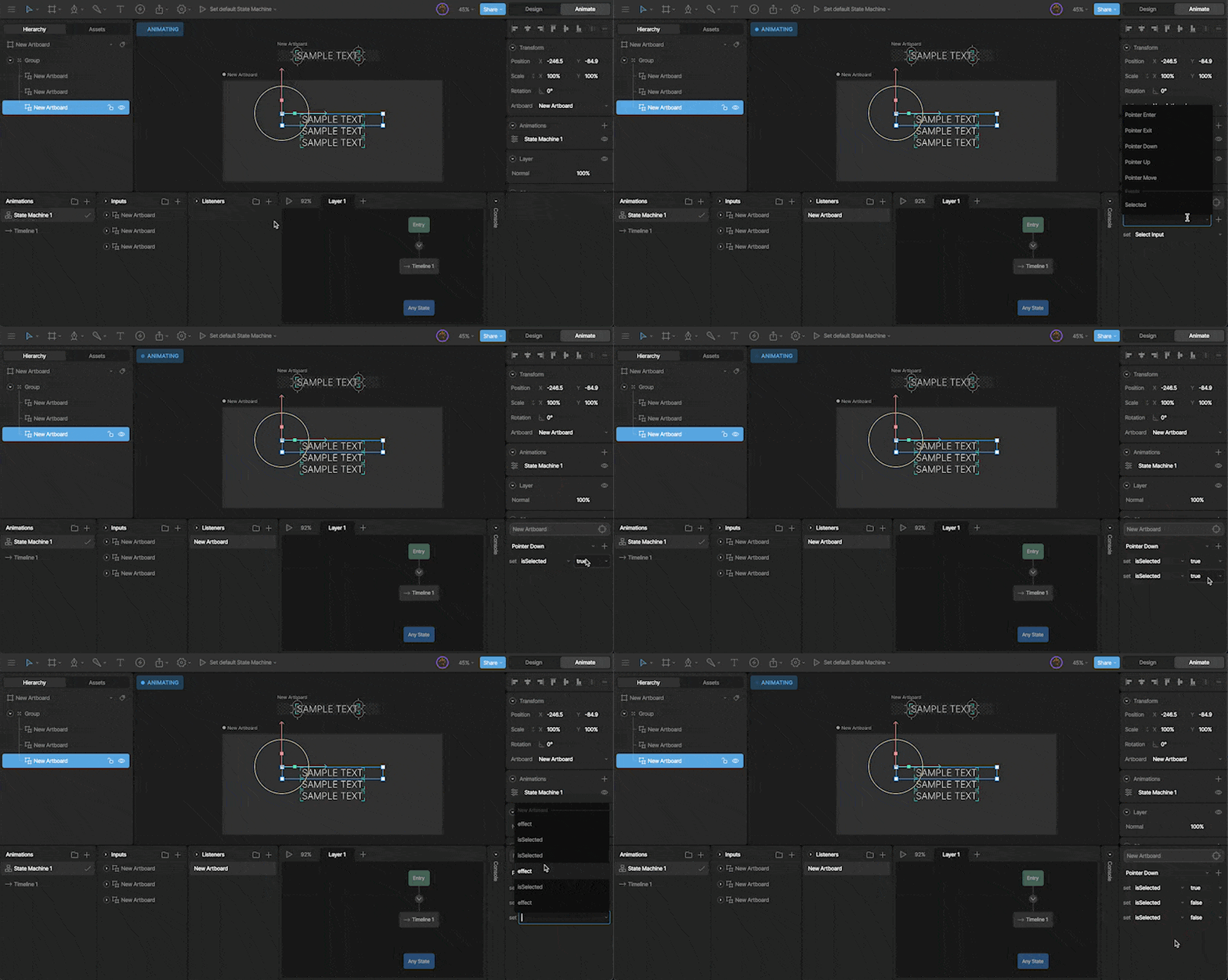
Using events
Additionally, we can use Listeners to listen for Events firing from our Component, and change inputs accordingly.